


Optimising efficiency: transforming manufacturing facilities into data-driven operations
Published: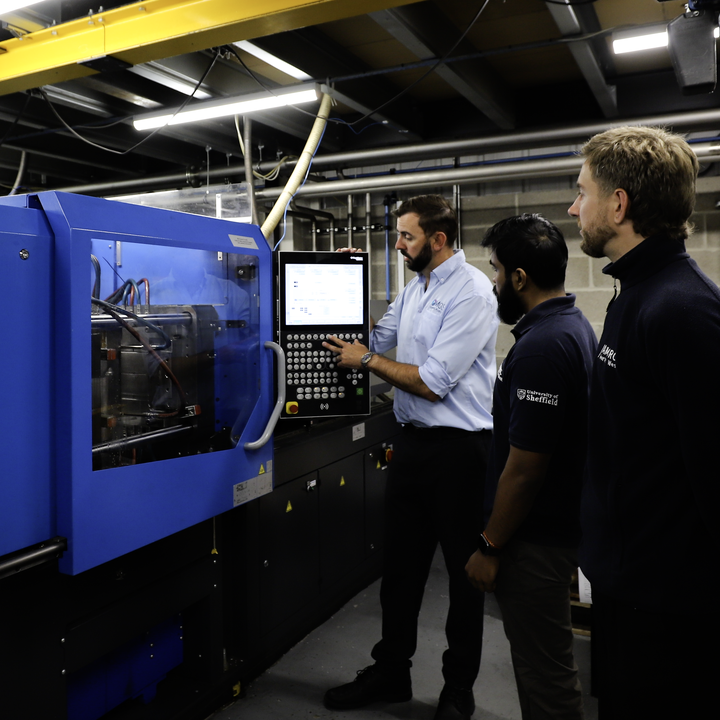
Challenge
To improve visibility of energy distribution and consumption across a production facility.
Background
MGS Technical Plastics is a privately owned plastic injection moulding specialist, based in Blackburn Lancashire. Established in 1974, MGS offers comprehensive manufacturing solutions to a diverse range of industries, including automotive, medical and energy.
With 17 injection moulding machines running over a 24/5 operation, sustainability has always been a key priority for the business. Previous work has looked to consider environmental impact and acting in most spheres, from roof solar panels and energy efficient all-electric machinery, to electric vehicles (EVs) for all staff. The company also buys in green supplied energy, and implements circular usage practices in its injection moulding process to reduce polymer waste.
As part of MGS’ ongoing commitment to sustainability and reducing their environmental impact, the business had started to explore ways in which they could better understand operational energy distribution across their high-volume manufacturing facility. By drilling down to individual asset levels, they would be able to identify opportunities to further reduce consumption where possible.
Innovation
Through an allocation of UK Shared Prosperity Fund (UKSPF) funding, the team at the University of Sheffield AMRC North West was able to support MGS in identifying opportunities for increased monitoring of its power consumption by deploying a comprehensive demonstrative set-up.
Following initial engagement and a subsequent discovery visit to the MGS site Senthil Kumar Raman and James Valentine, from the AMRC North West low carbon team, worked with maintenance lead Graham Watson to develop a project plan.
The plan utilised Industrial Internet of Things (IIoT) end devices and an internally developed universal control system (UCS), to conduct energy distribution and sustainability monitoring of key equipment. Following a successful commissioning and deployment process, data was transmitted via a LoRaWAN (long range wide area network) gateway, chosen for its long-range, low-power capabilities, into the UCS.
The set-up allowed the AMRC to collect real-time energy data from facility systems for advanced analytics and the creation of a dashboard interface, enabling clear visualisation of the data. Facility systems included MGS’ air conditioning system, water pump, water chiller and individual injection moulding machines.
Result
During the monitoring process, AMRC engineers identified intermittent power spikes in the water chiller system. These anomalies - likely driven by transient thermal loads, environmental fluctuations, or operational changes - highlighted the critical need for advanced performance analysis and system optimisation. By understanding the root cause of these short-term excursions, MGS was able to make the necessary informed changes to reduce these spikes and help to enhance energy efficiency, improve operational stability and ensure long-term reliability and performance of the chiller system.
The water pump also demonstrated consistent and heavy power usage during active periods, with the AMRC team able to provide recommendations including predictive control through variable speed drives (VSDs) and variable frequency drives (VFDs), which could further enhance efficiency by an estimated 10 to 15 per cent.
By making these improvements to reduce the water pump consumption, it was calculated that MGS would be able to save around 1,400 – 2,100kWh and between 175 - 265kg Co2 over a 12-month period.
The project delivered actionable insights and clear pathways towards improved efficiency and sustainability for MGS, supporting them to make data-driven decisions and continue to reduce costs and associated emissions. Following the project, MGS has already installed two new motors with VSDs that could result in annual savings of over £8,000.
Impact
As environmental compliance and increasing energy costs become increasingly critical for the sector, so does the need to have greater visibility and improved access to key operational data.
This project demonstrated how intelligent energy monitoring and control systems can transform traditional manufacturing facilities into smart, sustainable, data-driven operations.
Broader potential for the work is significant, as manufacturers across sectors can replicate the process through similar systems to reduce overheads, achieve internal sustainability targets and align with regulatory carbon emission standards.