
Helping a green startup take their insulation material to the next level
Published: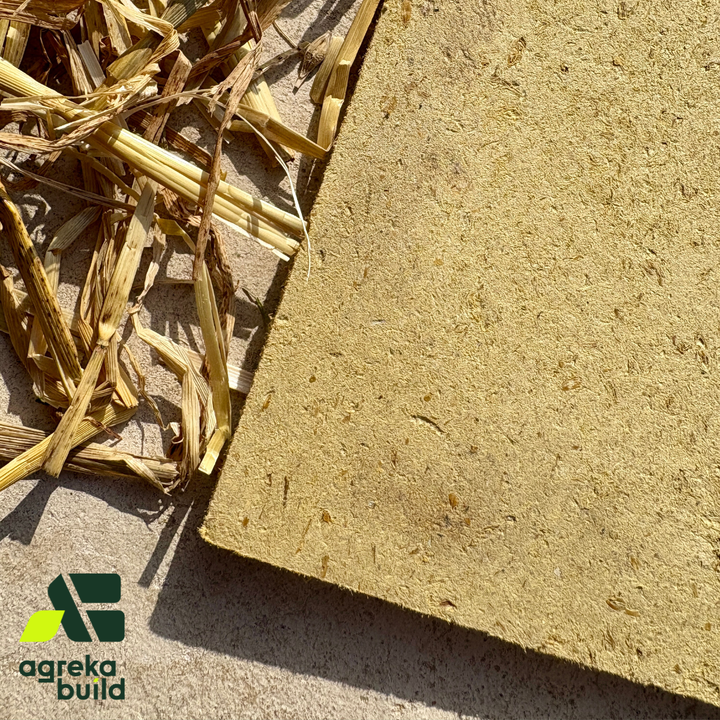
Challenge
To create a manufacturing process for a materials startup company who created a new type of insulation material for use in the construction industry.
Background
In 2022, a government report (PDF) said that the construction industry is responsible for about 40 per cent of the UK’s carbon emissions. The sector also consumes large volumes of raw materials and generates a third of the world’s waste.
Materials startup Agreka Build is aiming to lead the transition towards a net-zero, circular economy in agriculture and construction. The company’s team of architects and engineers has developed a new sustainable insulation material made from agricultural waste.
It has the potential to greatly reduce the environmental impact of the construction sector - and is claimed to be the only truly circular bio-insulation, as it is made entirely from unused bi-product and can be recycled into biofuel or composted at end of life.
After testing the concept in its laboratories, the company needed help to develop a full-scale manufacturing process.
Innovation
For a startup, it’s often too expensive to develop new bespoke manufacturing equipment - and flexibility is needed in the early stages, with the possibility of needing to explore/change the process. The AMRC’s huge breadth of industrial experience across multiple sectors means it can bring together technology used elsewhere to find the perfect solution using more affordable off-the-shelf machines.
The AMRC analysed Agreka’s existing production and looked at ways to scale them up and conducted market research into similar processes elsewhere. Some of the steps Agreka was using to make its insulation material were similar to those used in the production of chipboard and other sheet materials, so the AMRC investigated what machines might be capable of fulfilling Agreka’s requirements.
Result
This research was presented to Agreka in a comprehensive report. It suggested machines and tools for each step of the manufacturing process, including straw chopping, wet grinding, drying, pressing and rolling the material.
The AMRC provided clear costs for each option, and a detailed breakdown of what was needed to set up a pilot plant to prove the process, and then to set up an automated mass production plant.
Impact
This project saved Agreka a huge amount of time and gave clear, actionable steps to take, including lists of suppliers who could provide the equipment needed.
The company followed up on the AMRC’s advice, purchased equipment and began to set up its pilot line. It also secured a tender with the Department for Environment, Food and Rural Affairs to demonstrate the carbon-efficient performance and potential emissions reduction of their insulation material in operational retrofit environments.
This project has the potential to make a huge difference to the carbon footprint of the UK construction industry — making an important contribution to the country’s target for net zero. It’s also an example of the AMRC’s ability to use its industrial expertise to help small businesses take their next step towards commercial success.