
Sharpening a veteran knife manufacturer’s processes
Published: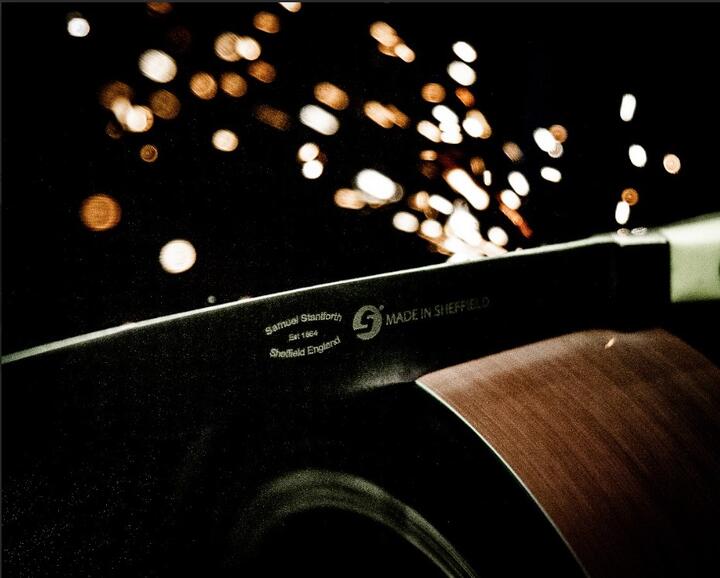
Challenge
To speed up and modernise a heritage cutlery firm’s manufacturing process.
Background
Scalloped knives are popular with chefs due to their ability to glide through food, giving a cleaner cut. It’s all down to the scallop shapes on the side of the knife, which introduce air between the blade and the object being cut.
Samuel Staniforth Ltd has been making scalloped knives in Sheffield since 1864. As a small artisan business, its knives are not mass-produced, but instead made by hand. This results in unique and distinctive products, but it is a labour-intensive and time-consuming process.
While the quality and reputation of its knives is unchanging, when it comes to manufacturing techniques the company moves with the times. It was looking to automate its scalloping process with a simple, flexible system. After meeting Ben Morgan, interim CEO at the AMRC, at an industry event, their cutlers began a project with the research centre to investigate solutions.
Innovation
An AMRC engineer visited the Samuel Staniforth factory and took some products away to work on. The team at the AMRC then undertook a feasibility study to determine how automation could be used for this process — and whether Samuel Staniforth had the correct equipment, or if new machinery was required.
The engineers measured the company’s existing knife flanks, analysed the data and came up with different ways of reproducing the scalloping effect across multiple blades. They then presented a detailed analysis to the cutlers, confirming that automation of the scalloping is feasible.
This included a review of different types of robot that could be used, each with a SWOT analysis to determine which would be the most suitable. The final recommendations suggested three of the best robots that could be used.
Result
Samuel Staniforth didn't take on the initial robot suggestions, but that wasn’t the end of the project. Next, the AMRC collaborated with a University of Manchester engineering student who was looking for a final year project with real-world impact.
The student spent a year designing a new machine Samuel Staniforth could use to scallop its knives, resulting in a detailed concept drawing.
Impact
The project with the AMRC saved the company’s cutlers the time and money they would have spent researching the options for automation themselves. Introducing a new, quicker scalloping process will allow Samuel Staniforth to expand its product range and save manufacturing time.
As the cost of running a business continues to increase, traditional manufacturing SMEs need solutions that can save them money and time. The AMRC is well placed to help, with links to high-tech suppliers and a unique knowledge of the latest machines. Its engineers are used to devising low-cost solutions for smaller businesses, ensuring the best value and return on investment.
With the AMRC’s help, heritage companies like Samuel Staniforth can continue to compete in the modern marketplace for many years to come.