


AMRC contributes to advancing canister and nuclear waste disposal readiness
Published: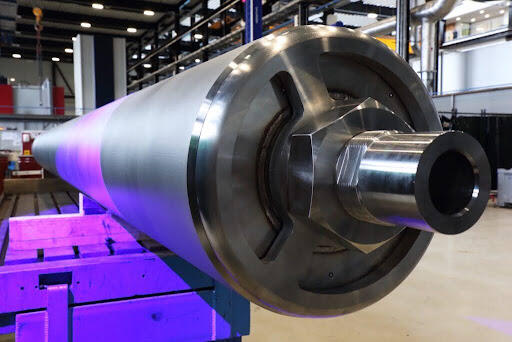
Deep Isolation, a leader in nuclear waste disposal technology, collaborated with the University of Sheffield Advanced Manufacturing Research Centre (AMRC) to successfully complete a multi-year project with the UK government, marking a major step forward in proving the feasibility and commercial readiness of deep borehole disposal solutions.
The Energy Entrepreneurs Fund (EEF)-9001 project, monitored by the UK Department for Energy Security and Net Zero (DESNZ), led to the manufacture of a first-of-its-kind disposal canister prototype.
Launched in December 2022, this project was instrumental in validating Deep Isolation’s patented borehole disposal technology for spent nuclear fuel (SNF) and high-level radioactive waste (HLW). The collaborative project, which involved Deep Isolation, AMRC, NAC International, Inc. and the University of Sheffield, focused on both canister design validation and assessing the UK’s manufacturing supply chain capabilities.
Rod Baltzer, CEO at Deep Isolation, said: “This project is a game-changer for deep borehole disposal canisters. It not only validates key aspects of our technology but also advances manufacturability, cost efficiency, and supply chain readiness – paving the way for future deployments.”
A key outcome was the successful fabrication of two prototype canisters designed to encapsulate a pressurized water reactor (PWR) SNF assembly for dry storage, transport, and final disposal. In parallel, Deep Isolation refined its performance models for long-term safety, leveraging corrosion resistance and post-closure gas migration studies, supported by data from a joint U.S. Department of Energy-funded project (SAVANT). These findings strengthen the case for deep borehole disposal as a scalable, retrievable and regulatory-compliant solution.
Charles Carpenter, head of research at AMRC’s nuclear manufacturing group, said: “Developing a viable, cost-effective solution for nuclear waste disposal is a critical challenge, and this project has demonstrated the manufacturability and scalability of Deep Isolation’s innovative canister design.
“By collaborating with industry leaders, we’ve not only validated key technical aspects, but also identified pathways to strengthen the supply chain for advanced nuclear waste disposal solutions. We are proud to have partnered with Deep Isolation and others on this groundbreaking effort.”
The project elevated Deep Isolation’s technology readiness level (TRL) from TRL 3 to TRL 6, a significant milestone toward deployment. Moreover, AMRC’s assessment of UK manufacturing capabilities identified supply chain challenges, particularly in sourcing the canister shell. The team proposed solutions to reduce manufacturing barriers, leading to projected cost reductions and a clearer pathway for future production at scale.
The performance feedback from this initiative informed an updated canister design, with the second prototype fabricated in early 2025 for additional testing. Deep Isolation will use this prototype to further demonstrate the safety and feasibility of its disposal solutions, strengthening industry confidence and regulatory acceptance.