
Multi-laser processing and additive manufacturing: new AMRC research
Published: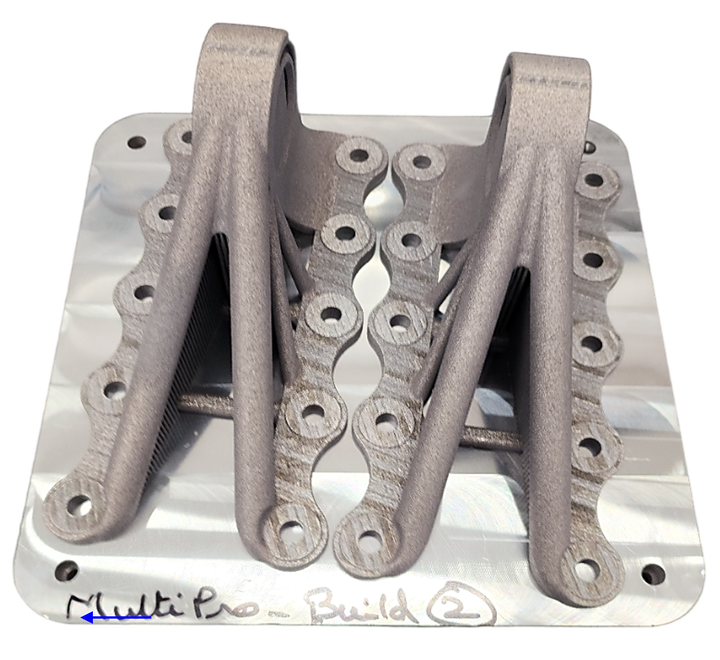
Multi-laser processing offers a faster, more efficient route for aluminium additive manufacturing — without compromising performance.
Exploring the use of multiple lasers simultaneously can transform the way we 3D-print aluminium - and this is the topic of new research undertaken by additive manufacturing experts at AMRC North West.
In the paper, “Impact of multiple-laser processing on the low-cycle fatigue behaviour of laser-powder bed fused AlSi10Mg alloy,” researchers at AMRC North West examine how using multiple lasers influences durability and fatigue life.
Conventional Laser Powder Bed Fusion typically relies on a single laser to melt layers of metal powder into a solid shape delivering a high precision but limiting the build speed.
Innovation in aluminium additive manufacturing
The findings from the work of AMRC North West researchers highlight clear advantages when using multiple lasers with optimised parameters:
- Components produced in this way showed a 34 per cent reduction in surface roughness, reducing potential crack initiation sites and improving reliability.
- At the same time, scan times were reduced by more than two-thirds, significantly increasing productivity while maintaining comparable mechanical performance.
However, despite the substantial increase in the build rate, the choice between multi-laser versus single-laser processing must take into account the thermal history of the part. Concentrating high energy input from multiple lasers within a small scan area can lead to excessive heating, increasing the risk of keyhole porosity and build failures, particularly in challenging features such as overhangs. In this context, more lasers do not automatically equate to better outcomes and careful optimisation remains essential.
Scaling aluminium additive manufacturing
With careful optimisation of process parameters and scan strategies, multi-laser processing offers a powerful route to scaling aluminium additive manufacturing for industrial applications.
Engage with our additive manufacturing experts and explore our latest innovations.